
What Should You Check Before Buying a Tube Filling Machine
Tube filling machine price in India can vary widely, so a useful quote must explain more than the machine cost. Your tube material, product thickness, filling quantity, and output target all affect the choice. A machine that suits one cream may need a different setup for another ointment or gel.
Buying on price alone can lead to weak seals, slow changeovers, or extra spending on parts. Before you compare offers, check what each supplier includes and whether the machine has been tested with your product and tubes.
This guide explains approximate prices, common buying problems, and the details needed for a clear quotation. Whether you are starting a small unit or expanding production, use the checklist to compare suitable machines and ask better questions before placing an order.
Tube Filling Machine Price in India Explained
For initial budgeting, Pharma Machinery India lists semi-automatic tube filling machines starting around ₹2.5 lakh. Its listed automatic tube filling and sealing machine range is approximately ₹6 lakh to ₹40 lakh, depending on configuration.
Treat these figures as indicative equipment prices. Confirm current pricing and the supply scope before making a purchase decision.
| Machine Option | Indicative Price | What Buyers Should Check |
|---|---|---|
| Semi-Automatic Tube Filling Machine | Around ₹2.5 lakh onwards | Manual tasks, filling arrangement, and sealing scope |
| Automatic Tube Filling and Sealing Machine | Approximately ₹6 lakh to ₹40 lakh | Tube compatibility, output, sealing system, controls, and included accessories |
| Machine with Additional Requirements | Application-specific quotation | Extra formats, product handling needs, testing, and documentation |
Do not assume that GST, freight, installation, training, or utilities are included. Ask the supplier to list these separately.
A broad price range helps you plan a budget. A detailed quotation tells you what that budget actually buys.
What Changes Tube Filling and Sealing Machine Cost
Tube filling and sealing machine cost depends on how the equipment handles your product, tube, and production process.
Tube material and sealing method
Plastic, laminated, and aluminium tubes have different closure needs. Plastic and laminated tubes commonly use heat-based sealing, while aluminium tubes use folding and crimping.
Ask which tube materials the quoted setup supports. If you plan to switch materials, confirm the required parts and sealing equipment.
Product thickness and behaviour
An ointment tube filling machine must suit the formulation being packed. A thick cream, sticky gel, and thinner lotion may behave differently during filling.
Share a sample and describe any temperature sensitivity. Ask the supplier to assess the product before recommending optional equipment.
Required production output
Higher automation can change both price and staffing needs. Compare the output expected with your actual product, fill quantity, and tube format.
A quoted maximum speed should not replace an agreed trial result.
Format changes and accessories
Extra tube sizes may require holders, guides, nozzles, or other change parts. Coding equipment and special controls can also affect the quotation.
List your current formats and planned additions before asking for a price.
Buying Checklist Before You Buy a Tube Filling Machine
Before you buy a tube filling machine, prepare one requirement sheet and send the same details to every supplier. This makes offers easier to compare.
| Buying Check | Information to Prepare | Confirmation to Request |
|---|---|---|
| Product | Cream, ointment, gel, or paste sample | Filling suitability and handling needs |
| Tube | Material, dimensions, and samples | Supported formats and sealing method |
| Fill Quantity | Minimum and maximum required fill | Suitable dosing setup |
| Output | Required good tubes per shift | Expected output under agreed conditions |
| Changeover | Number of tube and product variants | Parts, tools, and adjustment steps |
| Cleaning | Product change frequency | Access and cleaning procedure |
| Utilities | Available electricity and compressed air | Exact machine requirements |
| Supply Scope | Required accessories and documents | Included items and exclusions |
Also measure access doors and the available installation area. Leave room for operators, tube feeding, cleaning, and maintenance.
For pharmaceutical use, have your production and quality teams review the requirements together. A low purchase price does not resolve a mismatch with your process.
How to Compare a Tube Filling Machine Quotation
Compare quotations item by item instead of looking only at the final amount.
For example, one offer may include parts for three tube formats. Another may cover only one. The second offer could appear cheaper while leaving additional purchases for later.
Request written details for:
- Machine model and configuration.
- Tube materials and sizes covered.
- Filling range and agreed performance conditions.
- Sealing equipment and coding arrangement.
- Number of included format sets.
- Product-contact materials.
- Trial and acceptance procedure.
- Documents supplied with the machine.
- Installation, training, and transport scope.
- Warranty terms, delivery schedule, and payment terms.
Ask for a separate list of optional items. This helps you decide what is essential now and what can wait.
Common Buying Problems and Practical Solutions
Many purchase problems begin with missing details in the enquiry or quotation.
| Problem | Possible Buying-Stage Gap | Practical Solution |
|---|---|---|
| Weak or uneven seals | Actual tubes were not tested | Request sealing trials using production tube samples |
| Product drips near the seal | Filling behaviour was not assessed | Test the formulation and review nozzle operation |
| Output is below expectations | Speed was discussed without operating conditions | Agree on trial conditions and usable output |
| Changeovers take too long | Format-change steps were unclear | Ask for a demonstrated changeover |
| Extra costs appear after ordering | Accessories or services were excluded | Approve an itemised supply scope |
| Cleaning is difficult | Access was not reviewed | Inspect dismantling and cleaning steps before purchase |
These are possible causes, not a diagnosis of every machine fault. Use trials to identify what applies to your product.
Check a Product Trial Before Approving the Order
A useful trial shows how the proposed machine handles your product and tubes.
Send representative samples and agree on the checks in advance. Include different formats if the purchase depends on running several tube sizes.
During the trial, review:
- Filled quantity consistency.
- Seal appearance and suitable leak checks.
- Product residue around the tube closure.
- Coding position and readability.
- Rejected tubes and machine stoppages.
- Cleaning and format-change steps.
Record the conditions and results. Ask which adjustments or extra parts are needed before approving the configuration.
Request a Tube Filling Machine Quotation for Your Application
A clear enquiry helps the supplier prepare a relevant proposal.
Share your product sample, tube material, tube dimensions, fill quantity, and required output. Mention whether you need coding, multiple formats, or connection to other equipment.
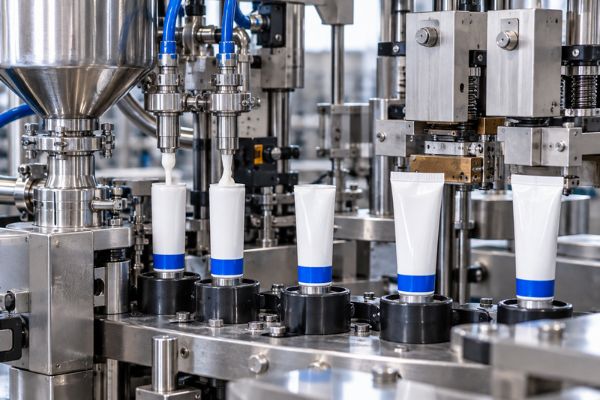
Pharma Machinery India lists tube filling equipment for applications such as creams, ointments, and gels. Explore the tube filling machine range, then request a quotation based on your specific application.
Ask for the recommended configuration, indicative delivery schedule, complete supply scope, and current price in writing.
Conclusion
The right tube filling machine should match your product, tube material, production target, and cleaning needs.
Use approximate prices to set a budget, then compare detailed quotations and sample trials. Before ordering, confirm what is included, what costs extra, and how performance will be checked. These steps help you make a clearer purchase decision.
Frequently Asked Questions
Pharma Machinery India lists semi-automatic machines from around ₹2.5 lakh and automatic configurations at approximately ₹6 lakh to ₹40 lakh. These are indicative figures. Request a current quotation for your tube material, filling quantity, and required output.
Provide your product type, tube material, dimensions, fill quantity, and production target. Include samples where possible. Mention coding needs, additional formats, available utilities, and any testing or documentation requirements.
Compare batch sizes, staffing, manual handling, and future demand. Semi-automatic equipment may suit some smaller operations. Automatic equipment may suit more continuous production. Ask both suppliers to explain the tasks operators must still perform.
Some configurations can support different tube materials with suitable sealing stations and change parts. Do not assume this is standard. Ask the supplier to identify the required equipment and demonstrate each proposed format.
Offers may include different automation levels, sealing systems, format sets, controls, and services. Compare the written specifications and exclusions. A lower total is meaningful only when both offers meet the same requirements.
Ask whether the supplier can test your formulation and actual tubes before order approval. Agree on filling, sealing, output, and cleaning checks. Confirm any trial charges and how the results will be recorded.
Confirm the machine configuration, total payable amount, exclusions, payment stages, delivery terms, and acceptance criteria. Also review warranty coverage, installation responsibilities, training scope, and spare-parts support. Keep these details in the approved purchase documents.