Table of Contents

  1. Product Overview
  2. 3-Zone Hot Air Vial Depyrogenation Tunnel
  3. Batch / Cabinet Type Depyrogenation Oven
  4. Tunnel vs Batch Oven: Which One Do You Need?
  5. Inside a 3-Zone Tunnel: Heating, Sterilizing, Cooling
  6. Technical Specifications
  7. Tunnel Validation: A 5-Step How-To
  8. USP, EP, and Annex 1 Compliance
  9. Inline Integration with Washer and Filling
  10. Frequently Asked Questions
  11. Installation, Validation, and Support
  12. Request a Quote

Product Overview

 A vial depyrogenation tunnel is the critical thermal-processing step between the vial washer and the aseptic filling machine on any sterile injectable line. It uses sustained dry heat (300–340 °C in the sterilizing zone) to destroy bacterial endotoxin (LPS) on the inner surface of washed glass vials, delivering an Fh ≥ 1000 and ≥ 3-log endotoxin reduction so the vial can enter the Grade A aseptic filling zone pre-sterilized and pyrogen-free. Two configurations dominate pharmaceutical production: 

  • 3-Zone Hot Air Sterilizing Tunnel — continuous in-line conveyor system with heating, sterilizing, and cooling zones under HEPA-filtered ISO 5 / Grade A laminar airflow. Throughput 100–400 vials/min. Used in commercial parenteral and vaccine manufacturing.
  • Batch / Cabinet Type Depyrogenation Oven — static hot-air chamber for small batches, clinical supplies, and stability samples. 60–120 minute cycles, programmable recipes, FDA 21 CFR Part 11-ready controller.

 Both machines are fabricated from SS 316L stainless steel with Ra ≤ 0.4 µm contact surfaces, HEPA-filtered air handling, and full IQ/OQ documentation for WHO-GMP, EU GMP Annex 1, and USFDA injectable facilities. 

340 °C

Sterilizing-zone temperature

Fh ≥ 1000

Dry-heat lethality

≥ 3 log

Endotoxin reduction

ISO 5

Grade A laminar airflow

3-Zone Hot Air Vial Depyrogenation Tunnel

What it is and when to use it

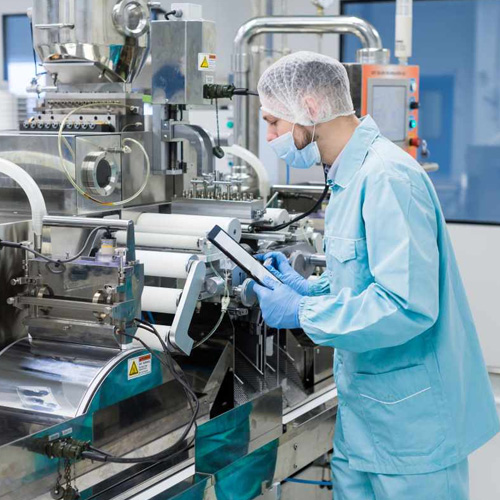
 The 3-Zone Hot Air Vial Depyrogenation Tunnel is a continuous in-line conveyor sterilizer. Washed, WFI-rinsed vials enter Zone 1 (pre-heat) and are progressively brought up to the sterilizing temperature. In Zone 2, the vials are held at 300–340 °C on a stainless steel mesh belt for the residence time needed to hit Fh ≥ 1000. In Zone 3, the vials are cooled back to ≤ 30 °C under HEPA-filtered ISO 5 / Grade A laminar airflow before they exit directly into the aseptic filling machine. Output: up to 400 vials/min of sterile, pyrogen-free, cool-to-touch vials. 

 Use this machine when: you run a commercial parenteral or vaccine line with bulk unsterilized vials, need continuous in-line processing, and have to meet USP <85>, USP <788>, EU GMP Annex 1, and USFDA 21 CFR 211.94 requirements.

Key Engineering Features

  • 3-zone temperature control: independent PID loops for pre-heat, sterilizing, and cooling zones with redundant thermocouples and a 21 CFR Part 11 audit trail.
  • HEPA-filtered laminar flow: H13 / H14 HEPA filters on the cooling zone deliver ISO 5 / Grade A unidirectional airflow; in-line DOP / PAO integrity test port.
  • SS 316L contact parts: belt, guides, and ducting in AISI 316L with Ra ≤ 0.4 µm electropolished finish, fully drainable, no dead legs.
  • Steam or electric / gas heat: choose from steam-coil heat exchangers (clean steam preferred), electric resistance heaters, or LPG / natural gas fired burners with a heat-recovery loop.
  • Variable-speed belt drive: VFD-controlled mesh belt with electronic tensioning; speed 50–600 mm/s matched to the upstream washer and downstream filler.
  • Insulated housing: double-wall SS 304 skin with 50 mm ceramic-fiber insulation; skin temperature ≤ 45 °C at full load, safe to touch.
  • PLC + HMI control: Siemens / Allen-Bradley PLC, 10″ color touchscreen, recipe storage for vial formats, real-time Fh calculation, alarm history, and full audit trail.
  • Safety and access: CE marked per EN 60204-1, full guarding, interlocked access doors, emergency stops, overtemperature protection, and a one-touch cool-down sequence.

Specifications — 3-Zone Hot Air Tunnel

Parameter Specification
Throughput 100–400 vials/minute, depending on vial format
Vial Size Range 2 ml–100 ml tubular glass vials conforming to ISO 8362-1
Vial Diameter 14 mm–52 mm
Vial Height 30 mm–115 mm
Zone 1 Temperature (Pre-Heat) Ambient temperature to 200°C
Zone 2 Temperature (Sterilizing) 300°C–340°C at the validated set point
Zone 3 Temperature (Cooling) ≤ 30°C at the tunnel exit
Fh Value Delivered ≥ 1000, typically 1200–1500 with a safety margin
Endotoxin Reduction ≥ 3-log reduction, validated according to USP <85>
Total Dwell Time 7–15 minutes, depending on vial format and operating speed
Belt Width 600 mm / 900 mm / 1,200 mm
Belt Material SS316L balanced-weave mesh belt
Belt Drive VFD-controlled drive with electronic belt tensioning
Heating Source Steam at 3–5 bar / electric heating / LPG or natural gas
Contact Parts SS316L stainless steel, electropolished to Ra ≤ 0.4 µm
Non-Contact Skin SS304 stainless steel with 50 mm ceramic-fibre insulation and surface temperature ≤ 45°C
Laminar Airflow ISO 5 / Grade A airflow with H13 / H14 HEPA filtration, rated at 99.99% efficiency at 0.3 µm MPPS
Power Supply 415 V AC, 3-phase, 50–60 Hz
Connected Load 35–60 kW, depending on the model
Steam Consumption 80–180 kg/hour for steam-heated models
Cooling Water 2–3 bar, 1,200–2,500 litres/hour
Compressed Air 6–8 bar oil-free compressed air, 200–400 litres/minute
Exhaust Ducted exhaust to atmosphere with backflow prevention
Noise Level ≤ 78 dB(A)
Tunnel Footprint 3,500–6,500 mm L × 1,200–1,500 mm W × 1,900 mm H
Machine Weight 2,500–5,500 kg
Warranty 12 months comprehensive warranty with lifetime technical support

Batch / Cabinet Type Vial Depyrogenation Oven

What it is and when to use it

 The Batch / Cabinet Type Vial Depyrogenation Oven is a static hot-air chamber used for small batches, clinical supplies, stability samples, and laboratory-grade depyrogenation. Vials are loaded on stainless steel trays, the chamber is sealed, the air is heated by electric or steam coils with HEPA-filtered recirculation, and the cycle runs for 60–120 minutes at 250–300 °C. A programmable controller delivers a validated Fh ≥ 1000 cycle with full 21 CFR Part 11 audit trail. 

 Use this machine when: you run clinical / Phase-I / Phase-II batches, need stability and sterility-test sample preparation, run small-volume niche injectables, or need a backup depyrogenation method for tunnel downtimes.

Key Engineering Features

  • Programmable recipes: stored cycles for 250 °C / 30 min, 300 °C / 60 min, and 300 °C / 120 min, with end-of-cycle cooling to ≤ 40 °C.
  • HEPA-filtered recirculation: H13 HEPA on the recirculation loop keeps the chamber air clean and the vial exteriors particle-free.
  • SS 316L interior: all chamber walls, shelves, and trays in AISI 316L with Ra ≤ 0.4 µm; SS 304 outer skin with 75 mm mineral-wool insulation.
  • Validation port: 4–8 thermal validation ports on the side wall for IQ/OQ thermocouple mapping studies.
  • 21 CFR Part 11 controller: recipe access by user ID, electronic signatures, full audit trail, and Ethernet / USB data export.
  • Multiple safety layers: overtemperature cutout, door interlock, overpressure relief, and a manual release latch in case of power loss.
  • Castor / leveling feet: lockable heavy-duty castors on smaller units, anti-vibration leveling feet on larger chambers.

Specifications — Batch / Cabinet Oven

Parameter Specification
Chamber Volume 200 L / 400 L / 800 L / 1,200 L
Operating Temperature Ambient temperature + 10°C up to 300°C
Temperature Uniformity ±2°C at 250°C after stabilization
Cycle Time 60–120 minutes, depending on the selected recipe
Fh Value Delivered ≥ 1000 with a validated operating recipe
Heating Source Electric stainless-steel finned heaters or steam coil
Heating Power 6–18 kW, depending on the model
Chamber Construction Fully welded SS316L stainless steel, finished to Ra ≤ 0.4 µm
Outer Skin SS304 stainless steel with 75 mm mineral-wool insulation
Air Recirculation H13 HEPA-filtered air circulation at 800–2,000 m³/hour
Trays Included 2–6 SS316L perforated trays, each measuring 600 × 400 mm
Validation Ports 4–8 DN 25 silicone-pad validation ports
Controller PLC with 7-inch colour HMI, 21 CFR Part 11-ready
Power Supply 415 V AC, 3-phase, 50–60 Hz
Compressed Air 4–6 bar oil-free compressed air, 30–50 litres/minute
Exhaust DN 80 ducted exhaust to atmosphere with backflow prevention
Chamber Footprint 900–1,800 mm W × 800–1,500 mm D × 1,200–1,800 mm H
Chamber Weight 350–1,200 kg
Warranty 12 months comprehensive warranty with lifetime technical support

Tunnel vs Batch Oven: Which Depyrogenator Do You Need?

The choice between a continuous 3-zone tunnel and a batch or cabinet oven depends on throughput, batch size and production-line integration. The right configuration should match your product mix, facility layout and validation requirements.

Parameter 3-Zone Tunnel Batch / Cabinet Oven
Mode Continuous in-line conveyor operation Static batch or cabinet operation
Throughput 100–400 vials per minute; up to 600 VPM with a dual-belt configuration 1–8 batches per day
Cycle Time 7–15 minutes residence time per vial 60–120 minutes per batch
Loading Direct in-line feeding from the vial washing machine Manual loading of vials or components on trays
Final Rinse Not required because the vial washer is installed upstream Not applicable
Capital Cost (USD) $75K–$200K $20K–$80K
Best For Commercial parenteral, vaccine and lyophilized injectable production lines Clinical batches, stability samples, niche injectables and backup depyrogenation
Footprint Approximately 3.5–6.5 metres of production-line length Approximately 0.9–1.8 metres of cabinet footprint
Validation Burden High: heat-distribution studies, endotoxin challenge and Fh mapping across all three zones Moderate: heat-distribution validation for each chamber loading pattern
Operator Skill Low, with recipe-driven PLC and HMI operation Moderate, due to manual tray loading and batch handling
Common Downstream Cooling zone followed by aseptic filling using rotary piston, peristaltic or time-pressure systems Manual transfer to a Grade A aseptic zone or restricted access barrier system
Particle Performance Suitable for meeting USP <788> requirements for parenteral products Suitable for meeting USP <788> when HEPA air recirculation is validated
Rule of Thumb:
For continuous production involving more than one batch per shift, a 3-zone depyrogenation tunnel is generally required. For small clinical, stability or development batches, a batch oven is usually sufficient and more economical. Many commercial parenteral facilities install both: a tunnel for routine production and a smaller oven for stability samples, retained samples and method-validation work.

Inside a 3-Zone Tunnel: Pre-Heat, Sterilize, Cool

 Each vial spends 7–15 minutes inside the 3-zone tunnel, depending on format, belt speed, and zone setpoints. The temperature profile is the heart of the depyrogenation performance. 

  1. Zone 1 — Pre-heat (Ambient → 200 °C): Vials enter at room temperature on a moving mesh belt. Recirculated hot air from the sterilizing zone is partially bypassed into the pre-heat zone, gradually raising the vial surface and interior toward the sterilizing temperature. The pre-heat zone typically has 2–3 temperature probes and a proportional damper to control heat transfer without thermal shock.
  2. Zone 2 — Sterilizing (300–340 °C): The critical zone. Vials are held at the validated sterilizing setpoint for the residence time required to deliver Fh ≥ 1000 across the entire load. Multiple thermocouples (typically 8–12) monitor the actual vial surface temperature in real time; the controller logs the temperature profile and calculates the achieved Fh for every run. A drop in Fh below the validated limit triggers an alarm and a reject signal at the tunnel exit.
  3. Zone 3 — Cooling (≤ 30 °C at exit): Vials are cooled by HEPA-filtered ISO 5 / Grade A laminar airflow before they reach the aseptic filling infeed. Cooling is critical: a vial that exits the tunnel too hot will create a thermal updraft in the Grade A zone, disrupting unidirectional flow and increasing particle counts. Cooling-zone HEPA integrity is tested in place (DOP / PAO) annually.

 Throughout the cycle, the controller logs zone temperatures, belt speed, HEPA pressure drop, and Fh calculation to a 21 CFR Part 11 audit trail. The data is exported via Ethernet for batch records. 

Tunnel Validation: A 5-Step How-To

 Validation is non-negotiable for any aseptic injectable line. The following sequence is a practical, audit-tested approach used by our customers’ QA teams. It aligns with WHO TRS 986 Annex 2, EU GMP Annex 1 (2022), 21 CFR 211.94, and the relevant USP chapters.

Step 1 — Define user requirements and worst-case load.

Document the smallest and largest vial formats, the highest-tolerated endotoxin load on incoming vials, the target Fh value (≥ 1000), the air-flow class (ISO 5 / Grade A), and the line speed. Lock these in a User Requirements Specification (URS) before ordering.

Step 2 — Perform IQ and OQ on the installed tunnel.

Run the IQ checklist (utilities, instrumentation, materials of construction, HEPA integrity, calibration) followed by OQ tests (no-vial empty cycle, alarm verification, sensor calibration, interlock function) over 3 consecutive successful runs. Document deviations and resolutions.

Step 3 — Perform heat distribution and heat penetration studies.

Load the tunnel with the worst-case vial pattern and place calibrated thermocouples in at least 10 positions including the slowest-heating corners. Run 3 consecutive cycles and verify Fh ≥ 1000 in the slowest vial with a safety margin of at least 20%.

Step 4 — Conduct endotoxin challenge studies.

Spike vials with USP Reference Standard Endotoxin (typically 10⁴ – 10⁶ EU per vial). Run the tunnel under the validated recipe. Test the vials post-tunnel by LAL per USP <85> and confirm ≥ 3-log endotoxin reduction. Repeat for 3 runs in the slowest-heating position.

Step 5 — Compile the validation report and ongoing monitoring plan.

Issue the final validation report signed by QA, engineering, and production. Define ongoing monitoring: continuous temperature and pressure logging, HEPA integrity test annually, endotoxin re-challenge annually or after any major change, and a revalidation trigger schedule.

Estimated timeline: 4–6 weeks from IQ start to final report, depending on lab turnaround. Estimated cost: $10,000 – $18,000 in QA and lab fees for a single vial format.

USP, EP, and Annex 1 Compliance

Every machine is engineered and documented against the following standards:

  • USP <85> — Bacterial Endotoxin Test (LAL)
  • USP <788> — Particulate Matter in Injections
  • USP <789> — Particulate Matter in Ophthalmic Solutions
  • USP <1207> — Container Integrity (for sealed-container validation)
  • EP 2.6.14 — Bacterial Endotoxins
  • EP 2.9.19 — Particulate Contamination: Sub-visible Particles
  • EU GMP Annex 1 (2022) — Manufacture of Sterile Medicinal Products
  • 21 CFR 211.94 — Drug Product Containers and Closures
  • 21 CFR Part 11 — Electronic Records and Signatures
  • WHO TRS 986 Annex 2 — WHO GMP for Pharmaceutical Products
  • ISO 9001:2015 — Quality Management
  • CE Machinery Directive 2006/42/EC
  • ISPE Baseline® Guide — Sterile Product Manufacturing Facilities

Inline Integration with Washer and Filling

A vial depyrogenation tunnel is the middle of a tightly synchronized line: 

  1. Upstream: Vial unscrambler (for bulk vials) or nest/tub de-bagger (for RTU vials)
  2. Washer: Rotary gripper (or external) — washed and WFI-rinsed vials feed the tunnel
  3. Depyrogenation Tunnel: 3-zone hot-air tunnel at 300–340 °C, Fh ≥ 1000, endotoxin reduction ≥ 3 log
  4. Cooling Zone: vial cooling to ≤ 30 °C under ISO 5 / Grade A laminar airflow
  5. Aseptic Filling: rotary piston or peristaltic filling under Grade A unidirectional airflow
  6. Stoppering: rubber stopper placement and pre-pressing
  7. Capping: aluminium cap sealing (if not done in the stopper star-wheel)
  8. Inspection: automated visual inspection for particles, cracks, fill volume, stopper presence

 Our tunnels are designed for direct feed from our rotary gripper washers, with matched conveyor speed, pitch, and entry/exit height. The tunnel exit is fitted with an integrated cooling conveyor that connects directly to the filling machine’s infeed star-wheel.

Frequently Asked Questions

A vial depyrogenation tunnel is a continuous in-line hot-air sterilizer that destroys bacterial endotoxin on the interior of washed glass vials before aseptic filling. It reaches 300–340 °C and delivers Fh ≥ 1000, allowing the vial to enter the Grade A filling zone pre-sterilized and pyrogen-free.

A 3-zone tunnel has a pre-heat zone, a sterilizing zone at 300–340 °C, and a cooling zone with HEPA-filtered laminar airflow. Vials travel on a stainless mesh belt, with matched entry and exit speeds so no operator handling is needed between wash and aseptic filling.

Fh is the equivalent dry-heat sterilization time at 170 °C, calculated from the actual time-temperature profile. Fh ≥ 1000 delivers ≥ 3-log endotoxin reduction — the threshold recognized by USP <85>, EP 2.6.14, FDA 21 CFR 211.94, and WHO TRS 986.

Sterilization destroys viable microbes. Depyrogenation specifically targets bacterial endotoxin, which is far more heat-resistant. LPS survives standard autoclaving at 121 °C, so depyrogenation needs sustained dry heat at ≥ 250 °C — hence a dedicated depyrogenation tunnel, not an autoclave.

Validation follows a 3-stage approach: heat distribution / heat penetration mapping, endotoxin challenge with USP Reference Standard Endotoxin, and ongoing monitoring with calibrated probes and 21 CFR Part 11 audit trail. Annual revalidation is required.

415V AC 3-phase power, 35–60 kW connected load; 6–8 bar oil-free compressed air; steam (3–5 bar) for steam-heated models or LPG / NG for gas-fired; cooling water at 2–3 bar; HEPA filters (H13 / H14) for laminar flow; and an exhaust vent with backflow prevention.

Standard 3-zone tunnels handle 2 ml – 100 ml tubular glass vials (ISO 8362-1), 14–52 mm diameter, 30–115 mm height. Custom tunnels are available for moulded glass, syringes, cartridges, and infusion bottles up to 1 litre.

Standard 3-zone tunnels process 100–400 vials per minute for 2–50 ml formats. High-capacity dual-belt tunnels reach 600 vials per minute. Total tunnel residence time is 7–15 minutes including pre-heat, sterilize, and cool.

Yes. The tunnel is designed for inline integration with an upstream rotary gripper or external vial washer and a downstream aseptic filling machine. Belt speed, pitch, and entry / exit height are matched to eliminate operator handling.

A tunnel is a continuous in-line conveyor system for high-volume production (100–600 vials/min). An oven is a static chamber for small batches, clinical supplies, and stability samples (60–120 min cycles). Tunnels serve commercial lines; ovens serve clinical and small-batch settings.

Customer Outcomes

 “Our previous dry-heat oven was a bottleneck for clinical supply. The 3-zone tunnel lets us run 240 vials/min continuous for our Phase-III vaccine, and we passed the FDA pre-approval inspection without a single observation on the depyrogenation step.”  

— Plant Director, Vaccine Manufacturer, Pune (reference available on request)

“Endotoxin post-tunnel dropped below the LAL detection limit (0.001 EU/ml) on every run. The validated Fh of 1,350 gives us a comfortable safety margin and our QA team stopped flagging the depyrogenation step in batch records.”  

— Head of QA, Generics Injectables Manufacturer, Ahmedabad (reference available under NDA)

 “The 3-zone tunnel integrated with our rotary gripper washer and time-pressure filler in 11 days from delivery to first good batch. The HMI recipes for 2 ml, 10 ml, and 50 ml formats were a one-touch changeover.”  

— Project Engineer, CDMO, Boston, USA (reference available on request)

Installation, Validation, and Support

Every machine is delivered as a turnkey project with the following scope:

  1. Pre-shipment Factory Acceptance Test (FAT) at our facility, with empty-cycle temperature mapping and Fh data
  2. On-site installation, commissioning, and Site Acceptance Test (SAT)
  3. IQ and OQ execution support, including protocol walkthrough with your QA team
  4. Operator and maintenance training (typically 4 days)
  5. 1-year comprehensive warranty covering parts and labor
  6. Lifetime remote support via video call, TeamViewer, and WhatsApp business
  7. Annual Maintenance Contract (AMC) options including preventive maintenance, HEPA integrity testing, and recalibration
  8. Spare parts kits shipped within 24–48 hours globally from regional warehouses

 Typical delivery times: Standard 3-zone tunnels ship in 10–14 weeks; batch ovens in 6–8 weeks. Installation and validation typically add 2–4 weeks on site.

Industries We Serve

  • Pharmaceutical and biopharmaceutical manufacturing
  • Vaccine and biological manufacturing
  • Lyophilized (freeze-dried) injectables
  • Sterile ophthalmic and nasal sprays
  • Veterinary injectables
  • Contract development and manufacturing organizations (CDMOs)

Certifications and Compliance

  • ISO 9001:2015 Certified Manufacturing
  • CE Marking (Machinery Directive 2006/42/EC)
  • cGMP-Compliant Design
  • WHO-GMP Compatible
  • USFDA-Ready Configurations
  • EU GMP Annex 1 (2022) Compatible

Related Vial Processing Equipment

  • Vial Washing Machine (/products/vial-washing-machine)
  • Automatic Vial Filling and Rubber Stoppering Machine (/products/vial-filling-rubber-stoppering-machine)
  • Vial Powder Filling and Rubber Stoppering Machine (/products/vial-powder-filling-machine)
  • Vial Cap Sealing Machine (/products/vial-cap-sealing-machine)
  • Vial Inspection Conveyor Booth (/products/vial-inspection-conveyor-booth)
  • Vial Labeling Machine (/products/vial-labeling-machine)

Request a Free Quote

Get a customized quotation with full technical specifications, utility consumption estimate, validation plan, and line-layout proposal within 24 hours.

  • Request a Quote (/quote/vial-depyrogenation-tunnel)
  • +91 96012 74176
  • Email Sales (mailto:info@pharmamachineryind.com)