
Choosing the right pharmaceutical filling machine is one of the most important buying decisions a pharma company will ever make. The wrong machine can waste lakhs of rupees, fail regulatory audits, slow down your production line, and force you to replace it within just a few years. The right machine, on the other hand, will run for 15 to 20 years, pass every GMP inspection, and grow with your business. In 2026, with new US FDA, EU GMP Annex 1, and WHO rules, the bar is higher than ever before — so the choice matters more than it did even five years ago.
This plain-English guide walks you through every step of the decision, the same way a senior engineer would explain it to a new factory owner. We will cover liquid types, viscosity, container sizes, speed, automation level, GMP requirements, validation documents, ROI calculations, and a simple 7-step checklist you can use before you place any order. By the end, you will know exactly which pharmaceutical filling machine your factory needs — and how to avoid the five most common buying mistakes.
Table of Contents
- What Is a Pharmaceutical Filling Machine?
- Why the Right Filling Machine Matters in 2026
- The 5 Main Types of Pharmaceutical Filling Machines
- 7-Step Method to Choose the Right Machine
- Step 1: Identify Your Product (Liquid, Powder, Cream)
- Step 2: Match the Filling Technology to the Product
- Step 3: Define Your Container and Closure
- Step 4: Calculate the Speed You Need (BPM)
- Step 5: Choose the Level of Automation
- Step 6: Check GMP, Material, and Validation
- Step 7: Compare Total Cost of Ownership (TCO)
- 5 Costly Mistakes to Avoid When Buying
- Pre-Purchase Checklist (Print and Use)
- Frequently Asked Questions
What Is a Pharmaceutical Filling Machine?
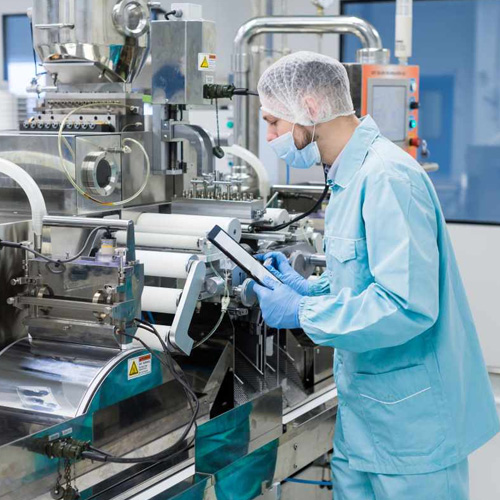
A pharmaceutical filling machine is a piece of equipment that measures a precise amount of a drug product — liquid, powder, cream, or suspension — and puts it into a container such as a bottle, vial, ampoule, sachet, or tube. The machine must do this with extreme accuracy (often within ±0.5%) because every dose a patient takes must match what is on the label. In pharma, “almost right” is not right.
Modern filling machines are made from SS 316L stainless steel (the same metal used in surgical tools), with mirror-polished surfaces, sanitary fittings, and easy-clean designs. They follow cGMP (current Good Manufacturing Practice) rules and can be validated for regulated markets. The simplest hand-operated benchtop filler is used for very small batches or R&D. The largest aseptic vial lines can fill 600 vials per minute inside a sterile isolator.
Why the Right Filling Machine Matters in 2026
The pharma industry is more competitive and more regulated than ever. In 2026, a wrong filling choice can lead to:
- Regulatory failure: FDA Form 483 observations or EU GMP non-compliance reports.
- Product recall: Under-filled or over-filled batches can force a costly recall.
- Production loss: A slow filler becomes the bottleneck of your whole plant.
- High waste: Poor accuracy means you throw away expensive API every month.
- Short machine life: A cheap machine often needs replacement in 3 to 5 years.
The right machine, on the other hand, is a long-term asset. A good automatic filler pays for itself in 2 to 4 years through labour savings, lower waste, and higher throughput. It also opens doors to export markets that demand validated equipment.
The 5 Main Types of Pharmaceutical Filling Machines
Before you can choose the right machine, you need to know what kinds exist. Here are the five most common types used in the pharma industry today.
| Type | Best For | Speed Range | Typical Price (2026, India) |
|---|---|---|---|
| Liquid Filling Machine | Syrups, suspensions, tonics and eye drops | 20–200 BPM | ₹2 lakh – ₹40 lakh |
| Aseptic Vial/Ampoule Filler | Injectables, vaccines and sterile liquids | 60–600 VPM | ₹80 lakh – ₹8 crore |
| Powder Filling Machine | Dry powders, granules and sachets | 30–200 PPM | ₹5 lakh – ₹60 lakh |
| Cream/Ointment Filler | Creams, gels, ointments and toothpaste | 20–120 TPM | ₹3 lakh – ₹35 lakh |
| Monobloc Rinser-Filler-Capper | Complete bottle lines for oral liquids | 30–200 BPM | ₹15 lakh – ₹1.5 crore |
BPM = bottles per minute, VPM = vials per minute, PPM = pouches per minute, TPM = tubes per minute.
7-Step Method to Choose the Right Machine
Follow these 7 steps in order. Skipping any step is the #1 reason people buy the wrong machine.
Quick summary:
Product → Technology → Container → Speed → Automation → GMP/TCO → Final decision.
Step 1: Identify Your Product (Liquid, Powder, Cream)
The very first question is: what exactly are you filling? Each product type needs a different machine.
| Product Type | Examples | Key Property | Best Filler Type |
|---|---|---|---|
| Thin Liquids | Water, saline and eye drops | Low viscosity (1–50 cP) | Gravity or peristaltic pump |
| Medium Liquids | Syrups, tonics and suspensions | Medium viscosity (50–5,000 cP) | Servo piston filler |
| Viscous Liquids | Honey, oils, gels and shampoos | High viscosity (5,000–50,000 cP) | Servo piston or gear pump |
| Paste / Cream | Creams, ointments and toothpaste | Very high viscosity (50,000+ cP) | Heavy-duty piston or auger filler |
| Powder | API, tablet counting and sachets | Dry bulk density varies | Auger filler or counting head |
Step 2: Match the Filling Technology to the Product
There are 6 main filling technologies. Each has clear strengths and weaknesses.
| Technology | Best For | Accuracy | Cost |
|---|---|---|---|
| Gravity Filler | Thin, free-flowing liquids | ±2–5% | Low |
| Peristaltic Pump | Sterile, shear-sensitive liquids | ±1% | Medium |
| Servo Piston | Most liquids, creams and pastes | ±0.5% | Medium–High |
| Gear Pump | Viscous oils and gels | ±1% | Medium |
| Vacuum Filler | Bottle filling with minimum dripping | ±1–2% | Medium |
| Auger Filler | Powders and granules | ±1–2% | Medium–High |
For most pharmaceutical applications, the servo piston filler is the most flexible choice. It can handle thin to very thick products, offers recipe memory for faster changeovers and is easy to clean.
Step 3: Define Your Container and Closure
Tell the supplier exactly what container you use. The wrong container spec can ruin a perfect machine.
- Container type: Bottle, vial, ampoule, sachet, tube, jar, drum?
- Material: Glass, PET, HDPE, PVC, aluminium?
- Size range: 5 ml ampoule to 1 litre bottle? List the smallest and largest.
- Shape: Round, square, oval, irregular?
- Neck size: 20 mm, 28 mm, 33 mm? (For capping)
- Closure type: Screw cap, ROPP cap, flip-off, crimp seal, dropper?
Pro Tip:
If you plan to use different bottle sizes, ask for “format parts” — change parts that let you switch sizes in minutes. Budget ₹50,000 to ₹3 lakh per extra size set.
Step 4: Calculate the Speed You Need (BPM)
Speed is the #1 reason people over-spend. Many factories buy a 200 BPM machine when they only need 60 BPM. To find your real need:
Required BPM = (Daily Target ÷ Hours per Shift) ÷ 60
Example: You want to fill 20,000 bottles per day, working 2 shifts of 8 hours each (16 hours total):
20,000 ÷ 16 hours = 1,250 bottles per hour
1,250 ÷ 60 = ~21 BPM
Add 20% buffer = ~25 BPM
So a 30 BPM machine is plenty. Buying a 100 BPM machine would be a waste of money.
| Daily Output Target | Shifts | Recommended BPM |
|---|---|---|
| Up to 5,000 | 1 | 10–20 |
| 5,000–20,000 | 2 | 20–50 |
| 20,000–50,000 | 2–3 | 50–120 |
| 50,000+ | 3 | 120+ |
Step 5: Choose the Level of Automation
There are 3 levels. Pick the one that matches your budget and labour situation.
| Level | What It Does | Best For | 2026 Price (India) |
|---|---|---|---|
| Semi-automatic | Operator places and removes bottles; machine fills only | Startups, R&D, very small batches | ₹1.5 – ₹5 lakh |
| Automatic (single function) | Machine fills automatically; capping and labelling separate | Growing companies, mid batches | ₹5 – ₹25 lakh |
| Fully automatic monobloc | One machine rinses, fills, caps, and labels | Large factories, export-grade | ₹25 lakh – ₹1.5 crore |
Common problem:
A startup buys a ₹60 lakh automatic line, but cannot run it because of unstable power, no compressed air, and untrained staff.
Solution:
Start with a semi-automatic machine. Reinvest the savings each year, and upgrade to fully automatic once you have steady orders for 12+ months.
Step 6: Check GMP, Material, and Validation
This is the step most buyers skip — and then regret. In 2026, every pharma filler should meet these minimum standards:
Material: All product contact parts in SS 316L (not just SS 304)
Surface finish: Internal surfaces polished to Ra ≤ 0.8 µm (mirror finish)
Sanitary fittings: Tri-clamp or aseptic connections, no threaded joints on product side
Cleanability: Designed for Clean-in-Place (CIP) or easy manual cleaning
Documentation: DQ, IQ, OQ, and PQ validation protocols included
Material certificates: SS 316L test certificates, FDA-grade gaskets (EPDM or silicone)
CE / cGMP mark: Electrical panel should be CE-marked and follow cGMP layout
Data logging: Critical parameters (speed, volume, temperature) logged to CSV or PDF
Example validation pack you should receive:
- Design Qualification (DQ) report
- Installation Qualification (IQ) checklist
- Operational Qualification (OQ) protocol
- Performance Qualification (PQ) protocol
- Material test certificates (SS 316L, gaskets)
- Surface roughness reports
- Calibration certificates for sensors
- Operation and maintenance manual
Step 7: Compare Total Cost of Ownership (TCO)
The price tag is only 60% of the real cost. The other 40% comes from installation, validation, training, spares, and downtime. Use this simple TCO calculator before you sign the PO.
| Cost Item | Typical % of TCO | How to Reduce It |
|---|---|---|
| Machine price | 60% | Compare 3 quotes, negotiate on validation, not parts |
| Installation & commissioning | 10% | Ask supplier if it is included; budget separately if not |
| Validation (IQ/OQ/PQ) | 8% | Buy as a package; avoid paying a third party if the supplier is approved |
| Training (operators + maintenance) | 3% | Ask for on-site training, not just video training |
| Spares (Year 1) | 5% | Order 5–10% spares with the machine |
| Annual maintenance | 7% | Take an AMC; expect 4–6% of the machine price per year |
| Downtime cost | 7% | Pick a local supplier with a service van within 200 km |
Rule of thumb:
If the machine price is ₹20 lakh, expect TCO of about ₹33 lakh over 5 years. If a supplier quotes much lower, ask what is missing.
5 Costly Mistakes to Avoid When Buying
Mistake 1: Buying on price alone.
The cheapest quote is often missing the validation, CIP, or spares. The real cost shows up 6 months later.
Fix:
Ask every supplier for the same 5-page technical comparison: material, surface finish, validation, automation, warranty. Compare apples to apples.
Mistake 2: Ignoring the bottle size range.
A machine perfect for 100 ml bottles may not handle 500 ml bottles. The piston size, nozzle height, and conveyor all need to be checked.
Fix:
Send your real bottles for a factory acceptance test (FAT) at the supplier’s workshop before shipment.
Mistake 3: Skipping the utility check.
A filling line needs compressed air (6–7 bar), 3-phase power, sometimes chilled water, and a clean room. Many small factories don’t have all of these.
Fix:
Ask the supplier for a utility list 3 months before delivery. Install utilities before the machine arrives.
Mistake 4: No operator training plan.
Even the best machine fails if the operator is not trained. Untrained staff cause 70% of breakdowns.
Fix:
Buy a training package that includes 2 days of hands-on training with your real product.
Mistake 5: Forgetting the after-sales service.
A machine made by a company with no local service team is a trap. When it breaks, you wait 2 weeks for a part.
Fix:
Pick a supplier with a local service centre, a 24-hour helpline, and parts available within 48 hours.
Pre-Purchase Checklist (Print and Use)
- Product tested on supplier’s machine with sample
- SS 316L material certificate provided
- Surface finish Ra ≤ 0.8 µm confirmed
- BPM speed proven with your bottle size
- Format parts available for all your bottle sizes
- Recipe storage for changeover included
- CIP-ready or easy manual cleaning
- Tri-clamp fittings on product side
- FDA-grade gaskets (EPDM or silicone)
- CE-marked electrical panel
- PLC with HMI touchscreen (Siemens / Allen-Bradley / Delta)
- On-site installation and commissioning included
- Operator training (2 days, hands-on) included
- Spare parts list and order with machine
- 12-month warranty and AMC option
- Reference list of 5+ pharma customers in India
- Service centre within 200 km of your factory
Frequently Asked Questions
Start with your product (liquid type, viscosity, foaming, temperature). Then match the container (bottle, vial, ampoule size and material). Next, decide on speed (bottles per minute) and the level of automation you need. Finally, check GMP compliance, validation support, and after-sales service from the supplier.
The main types are: (1) Liquid filling machines for syrups, suspensions, and tonics, (2) Aseptic filling machines for injectables, vials, and ampoules, (3) Powder filling machines for dry powders and granules, (4) Cream and ointment filling machines, and (5) Bottle filling and capping monobloc systems.
A semi-automatic machine still needs a human to place and remove containers. An automatic machine does the whole line on its own — feeding, filling, capping, labeling. Automatic is faster and more accurate but costs more. Semi-automatic is cheaper and best for small batches or new businesses.
In 2026, a small semi-automatic liquid filler in India costs about ₹1.5 lakh to ₹5 lakh. A mid-size automatic line costs ₹15 lakh to ₹60 lakh. A full aseptic vial filling line with isolator can cost ₹1.5 crore to ₹8 crore. Prices depend on speed, material, and validation level.
For viscous liquids like syrups, honey, oils, and creams, servo-driven piston fillers or peristaltic pumps work best. They handle thick fluids without dripping or losing accuracy. Avoid gravity or vacuum fillers for thick products.
GMP means Good Manufacturing Practice. It is a set of rules from the WHO, US FDA, and Indian DCGI that controls how drugs are made. A GMP filling machine uses SS 316L stainless steel, sanitary fittings, easy-clean surfaces, and full documentation for validation.
Yes. If you plan to sell to regulated markets (US, EU, UK, Canada, Australia), you must have a full validation pack: Design Qualification (DQ), Installation Qualification (IQ), Operational Qualification (OQ), and Performance Qualification (PQ). Buy from a supplier who gives all four.
Yes, if it is built for changeover. Look for machines with quick-release parts, recipe storage, and CIP/SIP options. Servo-driven fillers are the most flexible — you can switch from 50 ml syrup to 200 ml syrup in under 20 minutes.